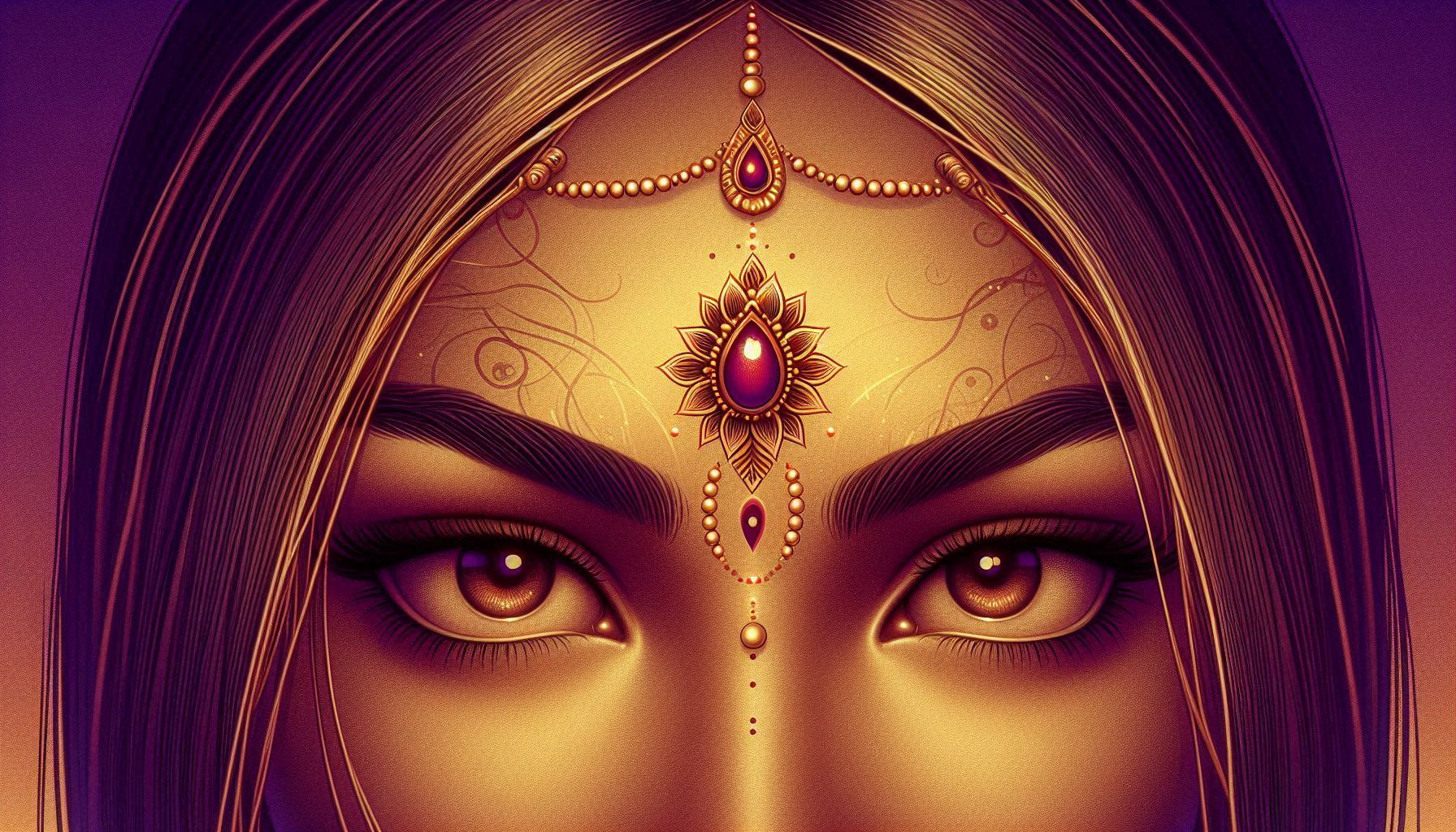
Centre Forehead Twitching Meaning for Female
A turning point — change is coming, though the tradition is ambivalent on whether it's for better or worse.
What Samudra Shastra Says
The centre-forehead twitch for a woman is read with more nuance than for a man. Tradition sees it as a signal of significant change — but the direction depends on other signs and on the life context. For an unmarried woman, the reading often relates to a marriage proposal or the arrival of someone important. For a married woman, it tends to relate to household changes — a move, in-laws' health, or decisions about children. Because this spot is tied to destiny itself, the tradition asks you to pay attention rather than predict: note what happens next.
Context & Timing
Strongest during festival periods or near significant dates in your own calendar (birthday, anniversary, etc).
Traditional Remedy
Apply a tilak, sit quietly for five minutes, and simply notice what decisions are sitting at the edge of your mind. If the reading is anxious rather than hopeful, chant the Saraswati mantra.
Quick takeaway
The Centre · Female Forehead Twitch is one of the Ang Vidya (twitch interpretation) markers in classical Samudrika tradition. A turning point — change is coming, though the tradition is ambivalent on whether it's for better or worse. Read it as a tendency to be aware of, not a fixed verdict — the value is in the self-knowledge, not the prediction.
How to read a twitch when it occurs
When a body twitch (sphurana) occurs, note three things: the body part affected, whether it is the right or left side, and the time of day (early morning, mid-morning, midday, afternoon, evening, or night). Each combination carries a specific signification in classical Ang Vidya. The reading is gender-specific — right-side twitches favour men, left-side twitches favour women, with the converse considered cautionary.
Tip: Twitches lasting more than a few minutes carry stronger weight than fleeting flickers — note the duration as well.
In the classical Ang Vidya tradition
Ang Vidya — body-twitch interpretation — is one of the oldest divinatory traditions documented in India, with references in the Atharva Veda Parishishta and detailed treatment in Brihat Samhita's shakuna (omen) chapters. The tradition reads spontaneous involuntary body movements (sphurana, spandanam) as immediate omens about events about to unfold. Right-side twitches in men and left-side in women are classically auspicious; the converse is cautionary. Time of day modifies the reading further.
Practical takeaway
This is a balanced feature in classical Samudrika reading — neither strongly amplifying nor restricting. Such markers indicate a domain where personal effort shapes the outcome more than innate disposition. The reading describes a baseline tendency, not a destiny. The classical advice is to use the reading as a mirror for self-awareness rather than a forecast of fixed outcomes.
How to use this reading
Samudrika readings indicate tendencies and dispositions, not fixed destinies. They are diagnostic — illuminating patterns you can then choose to work with, refine, or balance. A reading is most useful as a mirror for self-awareness, not a forecast of outcomes. The classical Vedic view holds that human effort (purushartha), intent (sankalpa), and ethical action (dharma) consistently outweigh fixed bodily markers in shaping life trajectory.
🩺 A Modern Note
Forehead twitching can occasionally be linked to tension headaches or eyestrain. Hydration and a ten-minute break from screens goes a long way.
Stay close to the wisdom — pundit-written, no spam.
One short letter for the areas you care about. Unsubscribe in one click whenever you want.
Areas of interest · pick any
DPDP-compliant. We never sell your details.